How to Figure Out What You're Actually Selling as a Creator
TL;DR: Most creators can't describe what they sell in one sentence. After 15 years in the creator economy, I've found that the ones who figure this out build businesses—the rest just build audiences. Content is a service, not just a product. The closer your content gets to an actual purchase decision, the more money you make. Define your service, figure out where you sit relative to the sale, and give yourself a home base that reflects it.
I've watched hundreds of creators burn out. Not because they ran out of ideas or stopped posting—but because they never figured out what they were actually selling.
They're posting five times a week across three platforms. They're doing brand deals, growing followers, maybe even making decent money. But if you sat them down and asked "what's your product?"—they'd stumble. They'd say "I'm a content creator" or "I'm an influencer" and not realize that's like saying "I'm a business owner" without being able to describe what the business does.
After fifteen years in the creator economy, I'm convinced this is the single biggest thing separating creators who build lasting businesses from creators who eventually walk away exhausted. And the answer is simpler than most people think.
The Content Creator's Product Problem
I've watched this industry evolve from the beginning. My wife Julia Berolzheimer and I started in the blog era—before Instagram, before TikTok, before algorithms decided who sees what. Back then, the format almost solved this problem for you. Blogging was slow, it was long-form, and it forced a direct relationship with your audience. You had to earn attention through taste, story, and trust.
Now creators are spread across five platforms, posting short-form content into algorithmic feeds, and it's remarkably easy to lose the thread. You're posting every day, but you've never sat down and defined what you're actually offering the person on the other side of the screen.
Here's why that matters: content is the least tangible product there is.
Think about it as a spectrum. On one end, you have physical products. You make something, someone buys it, you ship it. Everyone understands the transaction. Move down the spectrum to services—interior design, consulting, photography. Still concrete. You know what you're delivering and so does your customer.
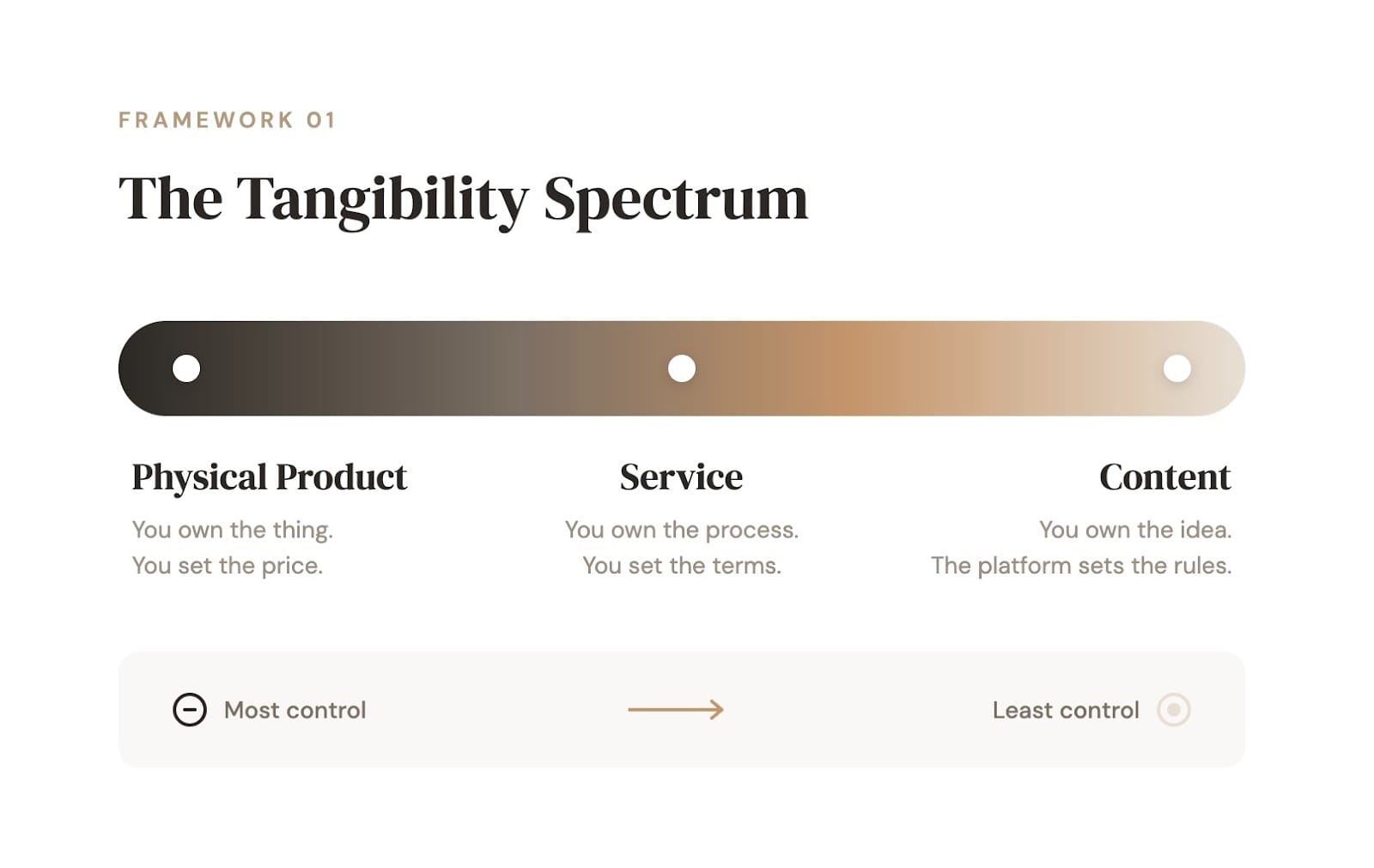
Content sits at the far end of that spectrum. You're not shipping anything. You're not billing hours. And because of that, it's incredibly easy to fall into the trap of creating content just to create content—posting because the algorithm demands it, without a clear sense of purpose behind it.
How to Define Your Product as a Creator
The reframe that changed everything for us: content isn't just a product. Content is a service.
Once you start thinking about it that way, the path forward gets much clearer.
For Julia and me, we defined our service early: we curate the overwhelming world of fashion, style, and lifestyle so our audience can make more confident decisions about what they buy and where they travel. One sentence. That clarity has shaped every decision—what we post, who we partner with, what we say no to, and how we make money.
The question every creator needs to answer is: What does my content help the other person do?
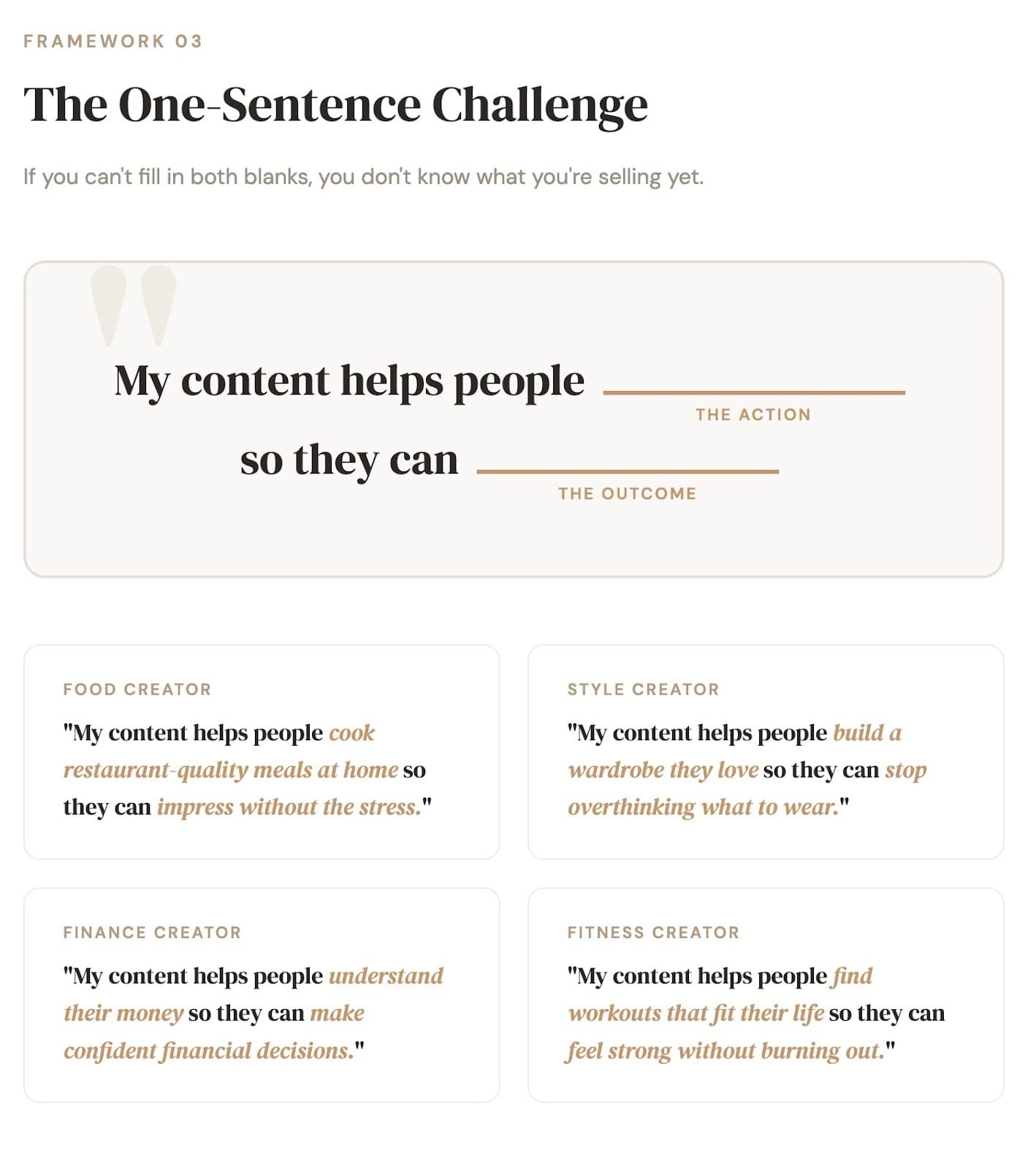
Maybe you're a creative marketing mind and your service is giving business owners fresh ideas and frameworks to grow. Maybe you're a home cook helping busy families eat better without the overwhelm. Maybe you're a designer helping people develop their own taste and make more confident choices about their home.
Whatever it is, name it. Write it down. If you can't describe your service in one sentence, you don't have a business yet—you have a hobby with an audience.
How to Actually Make Money as a Creator: Get Closer to the Sale
Once you've defined your product, the next question is: how close are you to the actual purchase?
This is the difference between building an audience and building a creator business. Both are valuable. But if you want real, sustainable revenue, you need to understand where you sit relative to the transaction.
The closer you can get to the sale, and the more you can directly impact that purchase decision, the more money you will make. This sounds obvious, but most creators haven't mapped their work against this framework.
Here's how to think about it:
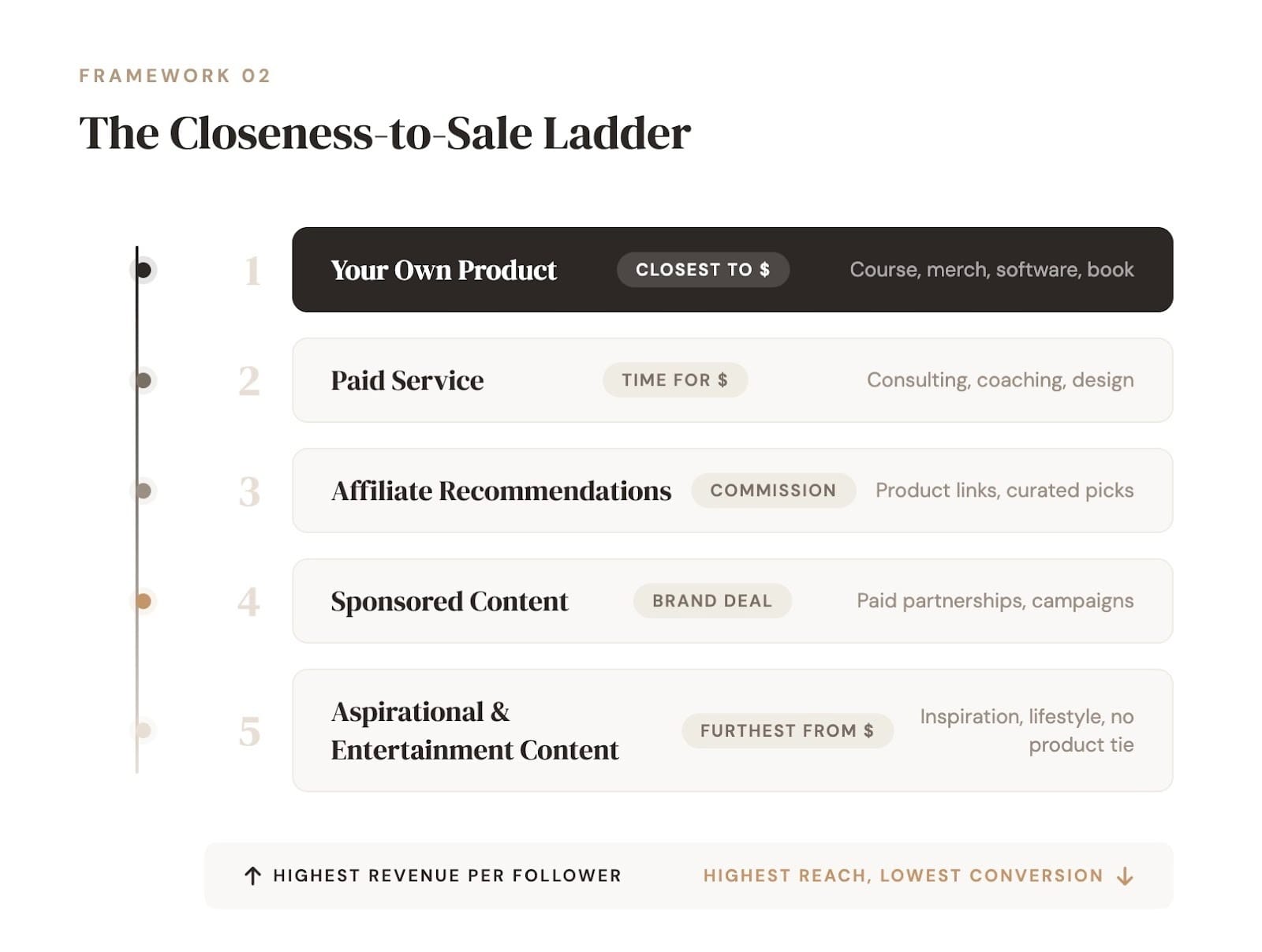
Your own product on your own checkout — This is as close to the sale as it gets. You control the product, the price, and the customer relationship. If you have an expertise, think about what packaging that expertise into a product looks like.
A paid service built on your expertise — Also close. You're trading time and skill for money with a clear deliverable on both sides.
Affiliate and commission-based recommendations — Your taste and curation directly drive a purchase. The more specific and trusted your recommendations, the more valuable this becomes.
Sponsored content and brand partnerships — You're being paid for attention and association, but you're further from the actual transaction. Still lucrative at scale, but you control less.
Aspirational or entertainment content with no clear product tie — Fine for building an audience. But don't expect it to pay the bills on its own.
You have to make a decision about where you want to sit on this spectrum. And the decision isn't just "what do I post today." It's "what service am I providing, and how does that service connect to how I make money?"
Why Every Creator Needs a Home Base
Here's what I've learned after fifteen years of building brands online: once you have that clarity—once you know your product and how you monetize—you need a central place that reflects it.
Right now, most creators are scattered. They've got an Instagram bio with a Linktree, maybe a website they built two years ago and haven't updated since, content spread across four or five platforms. There's no single place that tells their audience: this is who I am, this is what I offer, here's how we work together.
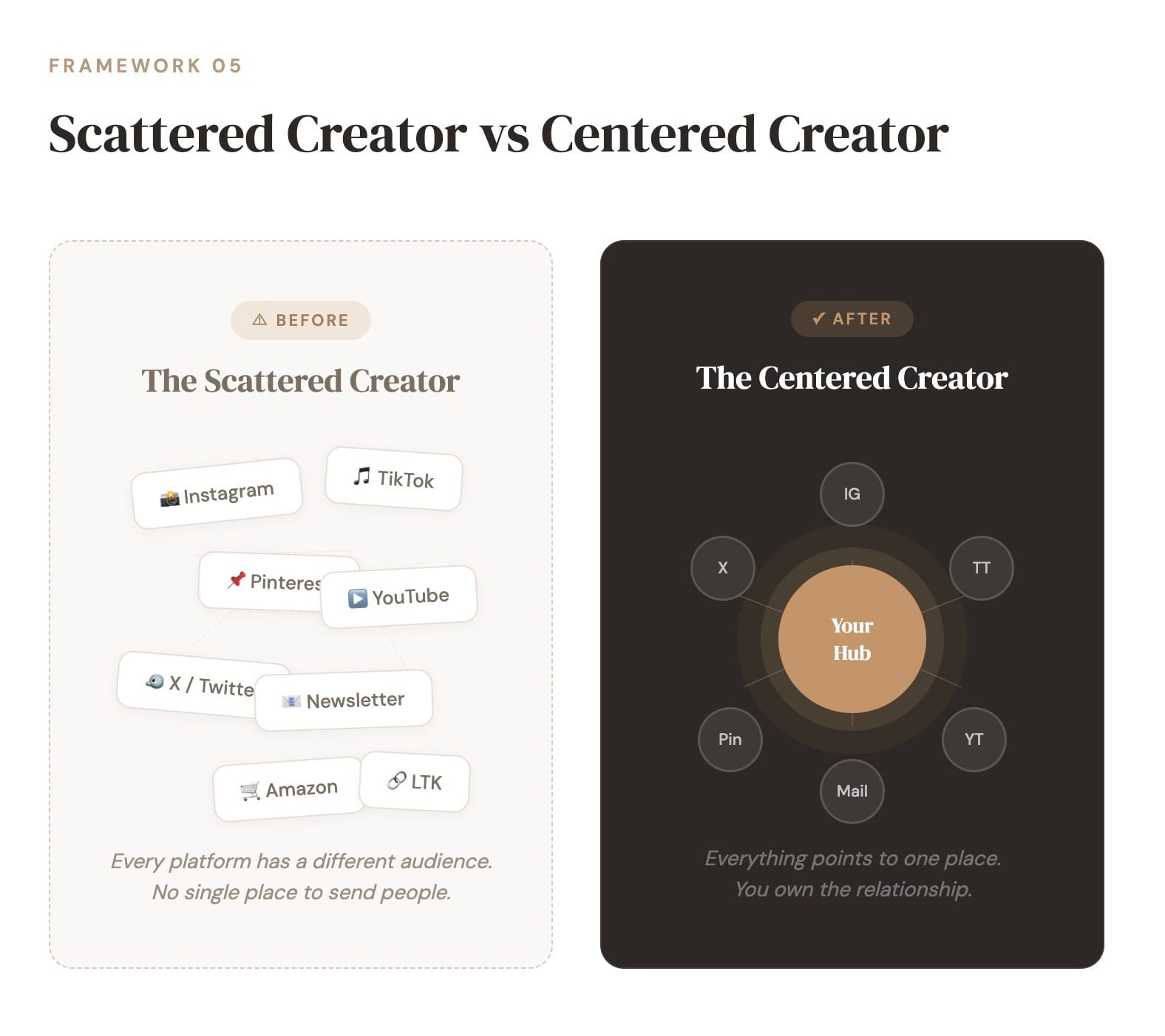
Someone like Lydia Millen is a great example. She's got a book, a Substack, a blog, a YouTube channel—beautiful content across so many channels. But all of that needs a hub. A place where the full picture comes together.
That's what we're building with Coreli. My co-founder Chloe and I have spent fifteen-plus years building websites and brands in the creator space. We know what works, and we know the biggest pain point: keeping your online presence up to date is a nightmare. Coreli gives creators, business owners, and design professionals a central home for everything they are—for $30 a month.
Because once you've figured out what your product is, you need somewhere to put it.